Saturday, December 19, 2015

Review of Star Wars: The Force Awakens


How can one possibly approach and analyze the latest chapter of Star Wars like a "normal" movie? After all, 38 years ago, there was simply a movie as opposed to a mega franchise. It was a one-off film simply made to entertain but ended up changing the movie industry as we know it. Now, much like the first prequel, 1999's The Phantom Menace, the start of a new trilogy isn't just a movie but a cultural event. But December 2015 represents a different beast than May 1999. Not only has original creator George Lucas moved on, but for the first time ever, we have no idea where the saga is headed (in contrast to the prequels, where everyone knew they would end with Anakin becoming Darth Vader). Sure, we have old friends like Luke Skywalker (Mark Hamill), Princess Leia (Carrie Fisher), and Han Solo (Harrison Ford) to comfort us to a certain degree, but the expectations are still gargantuan.

Director J.J. Abrams has made it unmistakably clear he's crafting The Force Awakens for lovers of the original trilogy. Ditto for Disney's goal of repairing the relationship with fans who despised the three prequels (I am not a member of that category). To that end, he has borrowed relentlessly from A New Hope, the movie that started it all, perhaps a little too much. No doubt Abrams has made a solidly entertaining, sweeping space opera that those very fans will eat up, but he may have played things a little too close to the vest. With one notable exception, the movie does little new or bold. The story beats and visual touches resemble A New Hope so strongly at times that the "deja vu" factor distracts from the many other things the movie does well.


As the familiar opening crawl informs us, Luke Skywalker has vanished. 30 years have passed since the destruction of the Empire, but remnants of the old guard have formed a new organization called the First Order. They sport a new killing machine even larger than the Death Star. It can't move (it's embedded inside a planet), but its firepower more than compensates. The same Stormtroopers we know and love are back as well, although one of them feels more conflicted than most about all the killing and dominance. His name is Finn (John Boyega), and following a village's brutal encounter with the deadly, lightsaber-wielding Kylo Ren (Adam Driver), Finn decides to bail on the First Order. He rescues a prisoner, Resistance pilot Poe Dameron (Oscar Issac) and the two escape in a TIE fighter, but the Order shoots them down and they crash land on the desert planet Jakku.

Meanwhile, on Jakku, we meet scavenger Rey (Daisy Ridley), who is scraping out a living collecting junk and trading it for food. She encounters the ball-like droid BB8, who is carrying a map to Skywalker's whereabouts, intending to reach the Resistance rebels. Joining forces with Finn, she eludes Kylo Ren's troopers en route to the Resistance, going so far as to steal the worn-down Millenium Falcon. They don't make it far into space before a freighter sucks up their ship. That's when they run into the Falcon's original owners, Han Solo and Chewie. Once our old friends learn the importance of BB8's mission, they have no choice but to return to the life they left behind.

Abrams aggressively emulates Lucas' approach with the original trilogy. In some cases, he's successful, like with the varies wipes, irises, and a reliance of practical special effects over CGI. There are also some clever touches involving Rey briefly struggling to fly the Falcon and fire a blaster before finally getting the hang of it. But there's no shaking the fact that far too much of this story feels like A New Hope with a different coat of paint. A youth living on a desert planet hungering for a better life? Check. A droid with crucial info? Check. The Falcon taking on TIE fighters? Check. Time spent inside a Cantina with wacky alien creatures? Check. An X-wing assault on a large circular base? Check, and so on. It's possible many fans won't care; they'll just be thrilled to return to a brand of Star Wars they know and love. But the quasi-remake vibe is so strong in places that once you see it, you can't "un-see" it.


Nevertheless, The Force Awakens has made some dramatic improvements for the series, especially in acting and dialogue. Gone is the stilted awkwardness of Anakin/Padme in Attack of the Clones or Luke's whining in A New Hope. Instead, the speech patterns and dialogue flow much more naturally. There are plenty of amusing utterances and not a bad line to be found. Also absent is anything aggressively geared toward children. No Jar-Jar Binks, Ewoks, or creatures of their ilk. The closest thing to "cute" is BB8, but he's a welcome, charming addition, full of clever visual sight gags. Finally, the look of the film is note-perfect. Abrams' vision of the galaxy truly looks like the next logical visual step for this series. The environments and battles are striking without relying too much on computers. You'll feel the weight of every ship maneuver, every shot fired, and every clashing lightsaber.

Daisy Ridley's Rey is a phenomenal addition to the Star Wars ensemble. She's plucky, heroic, and instantly sympathetic. If a woman can lead the charge in Aliens, The Hunger Games, or Mad Max, why not in Star Wars as well? John Boyega is every bit her equal. Finn can be a bit awkward and panicky, but his heart is in the right place and his character goes through an effective arc. Oscar Issac's Dameron slightly resembles Han Solo, although he doesn't have nearly as many wisecracks to go along with his piloting skills, at least not yet. Together, these characters, along with Han and Chewie, may not have as memorable a bond as we saw in A New Hope and Empire Strikes Back, but they connect.

On the villains' side, let's be honest; no one is going to outdo Darth Vader's level of charisma and menace. Abrams wisely doesn't have anyone try. Adam Driver's Kylo Ren wears a voice-altering mask, but that's where the similarities end. He's a leaner, more nimble combatant, and he's prone to more violent outbursts. The character also brews with tremendous inner conflict, serving the Dark Side but feeling the Light calling out. No doubt he's something of a Vader wannabe (something one character rightfully calls him out on), but there's nuance here that makes him interesting enough to devote a series to. The movie also contains an analog to Grand Moff Tarkin in General Hux (Domnhall Gleeson), and he's suitably creepy. Finally, there's the First Order's Supreme Leader Snoke, a giant bald creature (voice and motion capture by Andy Serkis) who could prove to be the deadliest adversary of all down the road.


As disappointments go, the only underwhelming aspect of The Force Awakens besides the repetitive plot is John Williams' score. Old-school material like the Imperial March and the Force Theme creep in effectively every now and then, but none of Williams' new compositions leave any impact. That's surprising considering that even the least of the Star Wars movies has delivered memorable, dramatic tunes. This may sound like nitpicking, but it's important to remember that over the many years, the music of Star Wars has displayed every bit an influence as its visuals. That magic is mostly MIA here.

Since this is the first Star Wars movie to debut during the social media age, fear of spoilers is at an all-time high. As such, Disney has gone to great lengths to hide Luke Skywalker's involvement in this story. He's in the movie, but credit Disney for keeping an aura of mystery about the character's role. Also, while I won't reveal specifics, I will say that The Force Awakens contains a twist or two well worth keeping under wraps. One event in particular will generate the most chatter, and it could become the lasting legacy of this movie. Watching some of these unfold, it's worth wondering how masterful The Force Awakens could have been had Abrams taken the leash off the story and really let the movie chart unexplored waters.

The Force Awakens is simultaneously delightful and a little frustrating. The more natural interactions between characters old and new give it life, and the action sequences are as dazzling as ever, but too much of this basic plot borrows from adventures' past. That doesn't ruin the film by any means, but it keeps it from ascending to greatness. Appealing to nostalgia is fine for now; in fact, it's what a majority of fans want. But in order to avoid the trap recent superhero movies have fallen into, the upcoming Episode VIII will need to take more chances. Nevertheless, this is still Star Wars through and through. It's not an awards contender or a candidate for my Top 10 of 2015, but it offers a blend of adventure, humor, and pathos guaranteed to please audiences of all ages.


Rating: 


Saturday, May 16, 2015

Review of Mad Max: Fury Road


When we consider what we want from a great action movie, Mad Max: Fury Road is an example of what we think of. We want entertainment we experience as opposed to merely watch. We want perfect pacing, a feast for the eyes and ears, and characters worth caring about. We want that "wow" factor to show up several times before the end credits roll. And when it's all over, we want to feel exhausted in the best possible way. Leave it to 70-year-old director George Miller, returning to his roots after a lengthy layoff, to deliver that which action movie lovers everywhere hunger for. For full impact, Mad Max: Fury Road demands to be seen on the biggest screen with the most state-of-the-art sound system possible.

Taking place in the same post-apocalyptic world as the previous three Mad Max films, Fury Road sets up its story at an astoundingly economical pace. We're quickly introduced to Max Rockatansky (Tom Hardy) as he's captured by a roving gang and forced to serve as a blood donor. Then we meet their leader, the warlord Immortan Joe (Hugh Keays-Byrne), who rules over a large town thanks to his control of the most precious resource-- water. He sends out several trucks, led by one of his best Generals, Imperator Furiosa (Charlize Theron) to procure gasoline. But Furiosa plans to betray him. Having smuggled his five wives, she seeks escape and salvation to a mystical "green land" far to the east. When Joe learns of her whereabouts, he sends an all-out war party to stop her. Max eventually escapes and joins her on a quest with seemingly impossible odds of survival.

Miller constructs Fury Road as a two-hour chase. On one level, the movie recalls Bong Joon-Ho's Snowpiercer in how it shows that action sequences on a linear path make for the most nerve-wracking experiences. Characters are constantly on the move, chasing and fighting from Point A to Point B. When Max and Furiosa's Big Rig does battle with armored cars and motorcycles, we always have a strong sense of where everyone is on the movie's map. This is an achievement which cannot be understated. How many summer action films devolve into chaos, where we can't tell what exactly is happening until the explosions stop? Not here. Each set piece tops the one that came before it.

The movie may be titled after Max, but the filmmakers let Furiosa become the focal point of the narrative. There's an excellent reason for this. Had Max been the man behind the escape plan, one could've dismissed this movie as just two men (Max vs Joe) fighting over five beautiful women. They would become "things" indeed. But by having Furiosa lead the charge and Max settle into a supporting role (albeit a strong, memorable one), Fury Road makes a proud feminist statement. With Charlize Theron dominating the screen, the effect is similar to that of Alien back in 1979, where Sigourney Weaver's Ripley emerged and left an indelible impact on viewers. She kicks ass big-time.

Visually, Fury Road is as impressive as anything one can find in 21st Century filmmaking. The day scenes pop with orange and red hues while the nights are covered in blue, and the level of detail in the costumes and set design is unparalleled. Miller relied on "practical" special effects far more than CGI, and while that makes for an exhausting shooting schedule, the result feels far more grounded in reality than it would otherwise. Certain sequences, like a destructive dust storm clouding the screen in red, are enough to make the jaw drop. Junkie XL's pulse-pounding score is every bit as important to the overall experience. Miller finds highly clever, even humorous, ways of integrating it (gotta love those drummers and the guitar/flamethrower guy).

The story's trajectory is simple but contains a deceptive amount of depth. When pausing for brief moments of rest and reflection, the filmmakers give us a great sense of the characters' inner struggles without overselling them. Flashbacks and back-stories do the job quickly and economically. The depravity of Joe's reign, where model-esque women serve as breeders, larger women become farmed for breast milk, and the poor scrounge for water, makes for some unsettling images. War-boy Nux (Nicholas Hault) has a memorable arc from villain's lackey to rebel hero. And there's even a little bit about religious fanaticism and capitalism. The message is clear: even in a post-apocalyptic world where society has a chance to "start over," we inevitably settle into the same class structure we have today.

Depending on how you look at it, Mad Max: Fury Road can be viewed as a sequel to a long-dormant franchise or a reboot. But however you see it, make sure you see it in theaters. It deserves to go down as an action classic. This is the Mad Max film that Miller wanted to make for so long but was constrained by budgetary limitations and the lack of a bankable star (we all know what happened to Mel Gibson). The sense of awe and the adrenaline rush from this movie-- that "you are there" feeling-- is something you're not likely to experience in quite this way again anytime soon. Will more sequels follow? It's hard to say, although Miller is on record saying he has at least two more stories to tell if this one succeeds. I say we make this a hit and have him show us his hand.

Rating: **** (out of ****)

Saturday, May 2, 2015

Review of Avengers: Age of Ultron


Avengers: Age of Ultron is more movie for your buck, or at least that's how Marvel is selling it. It contains more characters, more action sequences, and more plot threads than its predecessor. Yet it underwhelms because of an overwhelming sense of "been there, done that." There's nothing radically bad or cringe-worthy throughout this latest installment's 141 minutes, but neither does it offer anything wow-worthy from a visceral or emotional standpoint. Part of the thrill of The Avengers was seeing the development of each main character from solo movie hero to part of a team; they clashed with each other before eventually coming together to save the world. One would expect a sequel, to take these characters in new and exciting directions. Sadly, Age of Ultron does not take that leap, instead simply repeating the same structure. Our heroes fought aliens bent on Earth's takeover last time, so let's pit them against robots bent on Earth's destruction this time.

In James Bond-like fashion, this movie opens in the midst of a high-octane battle where the Avengers raid a Hydra compound in order to steal back Loki's scepter. They succeed, allowing Tony Stark to finally put the finishing touches on his greatest project, a massively intelligent A.I. that can protect the world from alien invasions. Ultron (voice of James Spader) gains consciousness remarkably quickly and deduces that the Avengers, for all the destruction they've caused in the name of peace, are no real heroes and must be eliminated. But that's only the first step in his master plan. Like Noah, he wants to purge the world of humanity and "start over."

Artificial intelligence is a hot topic in science fiction, but Age of Ultron suffers from a case of bad timing, arriving in theaters one week after the exquisite Ex Machina covered similar territory. While this movie is more action-packed and will draw more crowds, it barely even pays lip service to the fascinating ideas lurking beneath the surface. Ultron's introduction is rushed like a bat out of hell, and he's developed into little more than a standard-order megalomaniac. Give actor James Spader credit for imbuing this character with the appropriate level of charisma and menace (as well as some of the best one-liners, my favorite being the one involving a frisbee), and give the FX team just as much for giving Ultron impressively-realize facial expressions and movements, but both are wasted efforts.

Too many characters proves a hindrance as well. If The Avengers introduced a new age where single-hero movies don't satisfy the way team-based ones do, then Age of Ultron shows what happens when filmmakers spread this concept too thin. The need to keep track of so many means too few opportunities for each to delight. Sure, Stark and Thor toss out some amusing one-liners here and there, but everyone else is going through the motions. A love story develops seemingly out of nowhere between Black Widow and Hulk, but it doesn't work on any level. And the new characters, including lightning-fast Quicksilver (Aaron Taylor-Johnson) and mind manipulator Scarlett Witch (Elizabeth Olsen), get in on the action plenty of times but don't linger in the mind. Their arc, like just about everything else in Age of Ultron, is underdeveloped.

On the action front, Age of Ultron gets the job done with battles of impressive scope and energy. But even then, repetition occasionally sets in. Just like in the first movie, we have a sequence where Hulk goes crazy and the rest of the team has to subdue him (this time, it's Iron Man fighting back with a Hulk-sized suit of armor). The main villain gets his licks in before eventually being defeated in an all-out, city-wide orgy of destruction. At the very least, Age of Ultron corrects the most glaring problem of Man of Steel by having its heroes address the safety of ordinary citizens even during battle (something Superman did not do in that movie). These are super-heroes, after all.

Before this movie even reached screens, Marvel began hyping the biggest adventure yet for the Avengers, a two-part adaptation of Infinity War, which will spread across 2018 and 2019. The fact that they've done so already reveals what they think of Age of Ultron; it's simply a placeholder to give fans something to do before the culmination of all hype finally arrives. The audience I saw this with on opening weekend seemed to agree, as no one clapped when the credits rolled. Hell, the appearance of Thanos mid-way through the credits is more likely to make viewers impatient (just hurry up and bring him on, already!) instead of giddy with anticipation.

With the exception of Captain America: The Winter Solider, all of Marvel's Phase 2 movies have taken a step back creatively from Phase 1. If Age of Ultron is any indication, the concept of a team of heroes defending Earth from hordes of aliens and/or robots has been taken about as far as it can go. Pick your favorite moment from the first film, whether it be a line of dialogue or an action sequence, and this one offers a lesser version of it. Marvel needs to take lessons from other popular franchises like Star Wars, the Dark Knight trilogy, X-Men, and Hunger Games, whose second installments served up game-changing events from a character/story perspective. That's what good blockbuster franchises do. Mediocre ones are content to repeat the same formula, sporadically entertaining but never truly letting us feel the excitement. Time will tell whether Earth's mightiest heroes represent the former or the latter.

Rating: **1/2 (out of ****)

Saturday, December 27, 2014

My Top 10 Movies of 2014

This year, thanks to an energy-draining work schedule finally taking its toll on me (four 10-hour days in a row each week), I temporarily stopped writing movie reviews. But I couldn't let the year end without a Top 10 essay, which I always enjoy. I haven't written a full review of many of the films listed here, so I instead provide links to their respective IMDB pages. That will change in 2015, as a shift to a five-day, 8-hour work schedule will allow me more time and energy on a basis, and I'll return to enthusiastic movie-reviewing the way I did in 2013.

As we all look back on this particular calendar year, one particular theme always stands out. For me, 2014 was the first year I really started to wonder whether movies' cultural grip was coming to an end, with TV stealing its thunder and then some. After all, most people I talk to on a daily basis, whether in real life or on social media, are far more passionate about TV shows (Game of Thrones, Breaking Bad, House of Cards, etc) than they are about movies. As someone who goes to a theater on a fairly regular basis, not just during the summer but during awards season, I felt at times like part of a dying breed. Movies will never go away, but the game has changed. The theater/delayed home video release business model that has stood firmly for so long is finally showing cracks thanks to the rise of Netflix, TV stepping up its game, and out-of-control blockbuster budgets. For a more detailed look, I direct everyone to online critic James Berardinelli, the man who inspired me to write about movies in the first place, who has a wonderful three-part piece on the subject.

My 2014 list contains some high-profile releases you've heard of and some that debuted in art-house theaters. Some will compete for Oscars while others will not. My tastes are wide-ranging, after all. So what's missing? First of all, this year's best-reviewed movie (Boyhood), which I like and admire but didn't find to be that transcendent experience like seemingly every critic in America did. And then there's Guardians of the Galaxy, 2014's likely Box Office Champion in a weak year. It charmed many but left me cold and mildly irritated. Also, I didn't see some of the year-end, NYC/LA-only releases such as American Sniper, Inherent Vice, and Still Alice. I'll review those when they go wide in January.

Nevertheless, I found plenty of films worth celebrating. Please note that this is not an objective "Best of" list. Who in the world would be arrogant enough to claim something like that? These are simply my favorites of the year. Your Top 10 might look remarkably similar to mine. It's equally possible all ten choices would be different. Most people will be somewhere in between. But subjectivity is what makes list-making and list-reading so enjoyable, and the structure in general helps to explain the immense popularity of sites like Buzzfeed, which delight in presenting their thesis in easily organized chunks.

And so we cap off another year, first with five Runners-Up (in alphabetical order). These are five excellent films that just missed out on the Top 10 but are still well worth watching.

Runners-Up


Foxcatcher


The Imitation Game


The LEGO Movie


Snowpiercer


Under the Skin


And the Top 10 in reverse order, saving the best for last.


10. Dawn of the Planet of the Apes


A long-dormant series achieves awesome new life with this film, which takes the promises laid by 2010’s Rise of the Planet of the Apes and shifts the story to another level. Thrilling action and stunning visuals abound, but this film’s greatest asset is its even-handed treatment of the human/apes racial conflict and fear-mongering. This film reminds us that even in the context of a blockbuster, social commentary is a welcome addition to, rather than detracting from, the overall experience. 


9. Gone Girl

Franchise-movie fans had plenty to anticipate in 2014, but so too did book lovers with David Fincher’s provocative, mesmerizing adaptation of Gillian Flynn’s bestseller Gone Girl. It is at once a captivating and unpredictable thriller, an exploration of gender roles, and a brutal satire of news media’s sensationalism. Gone Girl is a grim, twisted film, guaranteed to fuel post-movie debate. Whether you think it’s brilliant or trashy, indifference is not an option with this one.    


8. Dear White People


This decade has seen several high profile movies looking at race-relations through a historical lens, but far too few have followed Spike Lee’s lead and taken a modern-day look at the topic. Director Justin Simien’s triumphant debut Dear White People does just that as it delves into the micro-aggressions and stereotyping of people of color that constantly occurs today, especially at the University level. It delivers big laughs but it also boasts a razor-sharp satirical edge that doesn’t always make that laughter comfortable. A special shoutout goes to Tessa Thompson, who deserves (but likely will not receive) an Oscar nomination for her role as a fiery, passionate activist and radio host.


7. Nightcrawler

Like Gone Girl, this movie blends brutal satire of TV news (this time the “if it bleeds, it leads” mentality) with the rhythms of an unpredictable thriller. Led by an unforgettably creepy Jake Gyllenhaal, whose performance (not to mention dedication—he lost 20 pounds for this role) ranks among the best of male acting in 2014, Nightcrawler is gripping cinema that unfortunately didn’t catch on at the box office. Special mention goes to the film’s climax (involving a diner), which is one of the most nail-biting of the year.


6. Birdman

Alejandro Innaritu’s latest film is loud and unsubtle in skewering blockbuster movie culture, overly pretentious artistic types, and critics, but does it ever provoke thought and then some. It’s equally engrossing with its smaller-scale comedy-drama narrative as it is with its large-scale ideas. Filmed in a fascinating form that appears to be one continuous shot, Birdman dazzles visually in addition to stimulating the mind. The film is also a gold mine of acting, particularly from Michael Keaton, who couldn’t have picked a better role for his big comeback. Expect Oscars aplenty with this one. 


5. Whiplash

“There are no two words in the English language more harmful than ‘Good job,’” says drill sergeant-esque music teacher Terence Fletcher (J.K. Simmons). But even someone with this character’s mentality will be saying “Great job” to what director Damien Chazelle has accomplished with Whiplash. This is primarily a character study involving a music prodigy and his Instructor from Hell, but its trajectory is anything but simple. It’s dramatically hard-hitting, multi-layered, unpredictable, and has much to say about the obsession with achieving greatness. As for J.K. Simmons, if it were up to me, I’d hand him that Best Supporting Actor Oscar right now.


4. X-Men: Days of Future Past

Birdman may have lamented the superhero movie’s dominance of the marketplace, but here is the strongest rebuttal imaginable, the most satisfying superhero film I’ve seen in six years. Days of Future Past’s themes (fear of the Other and choosing military security over liberty for those who are “different”) resonate louder than most movies in its field, and the ensemble cast tops even that of The Avengers. And the ending, brilliantly wiping away the bad aftertaste of 2006’s X-Men: The Last Stand, satisfies in the best possible way. Days of Future Past opened big in the box office before fading quickly into the shuffle, and that’s a shame. This is one superhero franchise whose sequel I’m eagerly anticipating as opposed to just accepting.


3. Selma

Taking a page from Steven Speilberg’s Lincoln in emphasizing a single game-changing political event over the totality of a person’s life, director Ava DuVernay has crafted a superior bio-pic of Dr. Martin Luther King, Jr. It contains sequences of stunning power that only achieve greater resonance because of the way they tie into certain real-life events of the past few months. Selma is primarily about the movement, but it also never loses sight of the man at its center; it’s a “warts-and-all” portrayal as opposed to hero-worship. Yes, the film invents tension between King and President Johnson that didn’t occur in real life, but this isn’t a documentary. But it is powerful narrative cinema that deserves all the accolades it is currently collecting.


2. Life Itself

A little more than a year ago, we lost one of film criticism’s most influential voices in Roger Ebert. If the Afterlife allowed him to watch this powerful documentary, I’m sure he would’ve been thrilled with the result. It is both a celebration of a legendary man’s life and an unflinching exploration of his final years of struggle. Life Itself is the correct title; it beautifully navigates the emotional highs and lows of the man at its center as well as those closest to him. Most importantly, we have Ebert himself to thank most of all. Had he not pressed on during his final years with a single-minded determination to show the truth of his rise and decline, much of this film’s power would be lost. As is, it is an epitaph of the highest order.


1. Interstellar

This one is just too easy, right? Everyone who knows me understands I’m a huge fan of Christopher Nolan, and Interstellar was far and away my most anticipated film of the past year. Critical reaction to the film was more mixed than most of Nolan's films, but for me, it delivered on all fronts, once again captivating us with a wonderfully suspenseful narrative, provocative ideas, and awesome immersion in its world. But this time around, Nolan upped the ante by balancing a deeply emotional core, namely a tale of love and sacrifice between a father and daughter, with the macro concerns of humanity’s role in the universe. Also, in a year with the fewest tickets sold since 1995, Interstellar represents one of those rare movies that demands large-screen viewing, preferably in IMAX format. It represents true, old-school, idea-driven science fiction, and nothing else wowed my senses and my mind in quite the same way this year. I rank Interstellar third in Nolan’s overall resume behind only Memento and The Dark Knight, but as far as 2014 is concerned, I didn't have a moments doubt about ranking it No. 1. 


Monday, June 30, 2014

Halftime Top 10 of 2014

Note: Although I saw every one of the movies I list here, I didn't review all of them. A brutal work schedule, fitness goals, and other activities tend to suck more than its fair share of energy out of me this past month or so. As the year continues, I'll make sure to review every movie I see, especially around Oscar season.

Unlike the first half of 2013, this year provided stronger mainstream movie-going experiences, give or take an Amazing Spiderman 2. There are a lot of sequels present on this list, and while that might indicate a certain degree of creative bankruptcy in Hollywood, let's be honest; that statement is old hat by now. The concept of a sequel has been around for longer than most of us have been alive, and that in and of itself isn't a bad thing at all. There are a few original films sprinkled in here (note Nos. 2-4, all of which have a decent shot at appearing on my list again in December), but for the most part, they're for niche audiences, not "the unwashed masses."


10. Edge of Tomorrow

It may not be thought-provoking science fiction, but it offers a fairly good time with its Groundhog Day-meets-Aliens premise. Edge of Tomorrow is equally effective as both a full-throttle action romp and as a comedy, so it's a little surprising that American audiences haven't latched on to it at the box office. Maybe Tom Cruise's antics from yesteryear have a long-reaching shadow. Whatever the case, Edge of Tomorrow offers fast-paced fun without losing sight of its main characters' humanity. I welcome Cruise continuing to do these movies well into his 60s if he's so inclined.
9. Godzilla

An American studio finally figures out how to do the Big Guy justice. It's a popcorn-munching monster flick, but it's not without its share of art, craftsmanship, and genuinely awe-inspiring moments. Some may complain that it "takes too long" to get to the monster-on-monster throw-downs, but the filmmakers do a solid job developing a few human characters worth caring about. There's also some good acting to be found (especially from Breaking Bad legend Bryan Cranston). With most movie franchises revolving around superheroes and/or toys, it's nice we can give a giant lizard a little room to breathe.


8. Captain America: The Winter Solider

Give Marvel credit for not resting on their laurels and repeating what has come before. Cap 2 is solid escapism, with a variety of action sequences, an intriguing storyline that pushes the Avengers arc into new and interesting directions, and a hero that's easy to get behind. It's not just another appetizer for Avengers 2, but a fun action movie that works on its own terms.


7. The Grand Budapest Hotel

Wes Anderson's movies are an event for art-house audiences, as evidenced by the packed theater I saw this movie in. The Grand Budapest Hotel offers pretty much everything fans have come to expect from the veteran director; quirkiness, a gorgeous visual sense, and a little heart to go along with the zaniness. It also offers Ralph Fiennes, in a turn as far away from his Oscar-ish roles (not to mention Lord Voldemort), an opportunity to flex his comedic muscles, which he does effortlessly.


6. How to Train Your Dragon 2

While not quite reaching the heights of Pixar's Toy Story series, Dreamworks' franchise does an admirable job filling the void of quality animated franchises. It's a surprisingly darker film than the original at times, and all the more memorable because of it. It didn't set the box office aflame, but it performed well enough that a third film is welcome. It has the wit, charm, and character development that makes it a worthy choice for adults to seek out, with or without their offspring in tow.


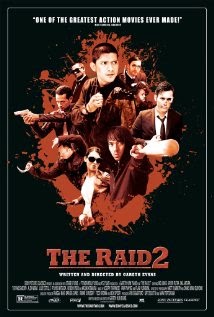
5. The Raid 2

It's a shame so few saw this; martial arts of this caliber has always impressed me more than anything a computer can create in a Spiderman or Transformers outing. Unlike the first film, The Raid 2 takes longer to find its footing, but when it does, the average action fan's jaw is likely to hit the floor. The final hour of this movie, as the more convoluted story reaches its apex, showcases some of the most brutally awesome fisticuffs one is likely to find. If you can handle the near-NC-17 level of violence, give this a go when it reaches home video.


4. The Lego Movie

Everything is awesome, indeed. Thankfully, Warner Brothers decided to open this movie in the dead of February winter, throwing a bone to moviegoers during what is traditionally reserved as a dumping ground for films studios have little faith in. Like most of Pixar's best work, this is a classic "dual-layered" approach to animation, where kids will enjoy the vivid color and frenetically paced story, and adults will laugh at the many satirical gags as well as take to heart the underlying message involving creativity and thinking outside-the-box. As of right now, we already have the film to beat in the Best Animated Film and Best Original Song for the next Oscars.


3. Locke

The basic story, that of a man on a 90-minute drive as he has several life-altering conversations with people via his phone, may sound dry and tedious. But looks can be deceiving. Locke is one of the more memorable films I've seen this year thanks to two key ingredients; a world-class performance by Tom Hardy and an undeniable ring of truth in the dialogue. It's so easy to relate to the main character's situation that the movie's single setting becomes an asset rather than a detriment.


2. Under the Skin

Bold, trippy, deliberately ambiguous, and unlike anything you'll see all year, Under the Skin is tailor made for adventurous movie-goers. It has plenty to say about humanity, sexuality, and even rape culture, but only those who are willing to read between the lines will discover exactly what that is. Also, while Scarlett Johansson's nudity has been much-publicized, the way she handles this ambiguous lead role as a whole is what makes her so memorable here. Bonus points for the unnerving soundtrack, which I guarantee you won't be able to get out of your head.


1. X-Men: Days of Future Past

It's the crown jewel of the first half of 2014, and my second favorite superhero movie of all time (behind only The Dark Knight). Days of Future Past plays far more like thought-provoking science fiction with superhero flavoring than your standard operating procedure from Marvel. The storyline is wonderfully dense and relentlessly suspenseful, the acting of the ensemble cast is second to none, and the ending satisfies emotionally in the best possible way. The level at which this movie succeeds viscerally, intellectually, and emotionally sends a resounding message to all present and future filmmakers who work in this sub-genre. This is one franchise I truly, eagerly await future installments of, and that's something I can't say about most others.

Sunday, May 25, 2014

Review of X-Men: Days of Future Past


Now this is what I'm talking about. In a market over-saturated by superheroes, movie-goers needed something bigger, bolder, and more engrossing than your average good-guys vs bad-guys entry. That's where X-Men: Days of Future Past, easily the best superhero film I've seen in six years, blows all competition out of the water. Yes, it's based on characters movie-goers have come to know and love over the past decade-plus (and even longer for most comic book aficionados), but more importantly, it works singularly as a science fiction film. Elements that seem standard-order in most blockbusters are given real weight due to the ideas and the stakes involved. The best of these types of movies have a three-pronged agenda: tell a captivating story with characters worth caring about, dazzle the senses with action-packed conflict, and use the trappings of a superhero tale to serve up social commentary that transcends the material. Director Bryan Singer, who first brought these characters to screen life 14 years ago, hits a home run in all three.

The basic story involves time travel of the Terminator variety, but the original "Days of Future Past" arc, as told in the comics, pre-dates James Cameron's action classic. This film wastes no time whatsoever getting the ball rolling as we glimpse a war-torn Earth circa 2023. The X-Men face extinction by the Sentinels, machines of war created 50 years ago to wipe out the threat of mutants and all humans who aide them. With powers based on the DNA of shape-shifter Raven aka Mystique (Jennifer Lawrence), the Sentinels represent an overwhelming, impossible force to take down and have grown to enslave all civilization. The X-Men are far outmatched as is, so they place their hope in one last effort: send Wolverine (Hugh Jackman) back in time to stop the creation of the machines. He has a full plate indeed; not only must he convince the 1973 versions of Prof. Charles Xavier (James McAvoy) and Magneto (Michael Fassbender) to put aside their differences and work together, but he also must stop Mystique from killing Sentinel creator Boliver Trask (Peter Dinklage), an event which triggers an irreversible course of action.

Time travel is always an inherently fascinating concept in science fiction. Not only does it require audiences to pay close attention, but the paradoxes and moral quandaries provide endless intellectual food for thought. Days of Future Past, much like 2012's Looper, tills this fertile ground with awesome success. Here's the kicker of them all: the act of embarking on a mission to stop something from happening leads to a chain of events that results in the same outcome anyway. This is no lightweight action outing; a pall of darkness and dread hangs over events, even during some of the film's lighter moments of wordplay. In a vast majority of superhero films, we're certain that no matter what obstacles our heroes face, all will turn out fine in the end. That inevitability is missing here, especially when one considers that previous X-Men films haven't been shy about killing off characters. As a result, Days of Future Past at no point feels like events are going through the motions. The stakes are much, much too high for that.

Unlike most films of its ilk, Days of Future Past doesn't have a singular villain (with the possible exception of the Sentinels in 2023). One might think this to be a weakness, but upon closer examination, it's actually a great strength. One of this movie's major themes is that "good" and "evil" are relative; multiple characters in the 1973 scenes have compelling reasons for how they approach the "mutant problem." For Magneto, it's a growing realization that evolution favors his race. For Mystique, it's revenge for the capture and slaughter of her friends. For Trask, it's matters of National Security and peace among humans (Days of Future Past effectively weaves the Vietnam War and its accompanying controversy into the overall tale). And for Charles, it's freedom from the burden of his powers (shades of Anna Paquin's Rogue in the original film). The X-Men films have always represented a clever allegory for minority rights, but never has it been as potent as it is here. Days of Future Past argues that perhaps the greatest villain of all is our willingness to trade liberty for security.

Days of Future Past is longer (131 minutes) and denser than a majority of superhero films (with the possible exception of Christopher Nolan's Dark Knight trilogy), but those who desire action and spectacle will certainly earn their money's worth. But this isn't like what movie-goers have seen in Marvel's Avengers arc or the two recent Amazing Spiderman flicks. The first action sequence, a fluidly choreographed skirmish between several X-Men and three sentinels, sets the tone early. Seemingly evenly-matched battles quickly turn into massacres by the superior Sentinels. Singer dazzles us later on with an awe-inspiring sequence involving the lightning-fast Quicksilver (Evan Peters) that, believe it or not, provides extremely effective (and welcome) comic relief. And that bit involving a floating RFK Stadium you've no doubt seen in the trailers? It's there all right, and Singer masterfully cross-cuts between it and the last stand of 2023.

Is there a better superhero ensemble cast than the one Singer has assembled here? Not only are Patrick Stewart and Ian McKellan superb in their long-awaited return, but it's a credit to the job of the rest of the cast that we don't miss them when they're away for large stretches. Hugh Jackman's Wolverine is our anchor; many of the film's other key players have motivations painted in shades of grey, but we also need that one character we know is inflexible for all the right reasons. McAvoy is even stronger here than he was in 2011's X-Men: First Class, as well he should be given his character's turmoil. And Fassbender? It should come as no surprise that he's once again (sorry for the pun) magnetic, but you probably knew that already. Meanwhile, Jennifer Lawrence may not have the screen time she does as Katniss, but she's no less impressive in earning our sympathies. And of course, Game of Thrones fans are likely to get a kick out of Peter Dinklage.

With all the things Days of Future Past does right for the casual fan, one could argue it's greatest achievement of all is Singer's brilliant, table-clearing move to heal the wound caused by 2007's disappointing X-Men: The Last Stand. I won't reveal it here, but let me put it this way: if a giant asteroid was on its way to wipe out Earth tomorrow and that meant no more X-Men movies, I couldn't think of a better note for things to conclude on. Obviously we know that won't happen as a short post-credits scene teases X-Men: Apocalypse in 2016 (also to be helmed by Singer). Nevertheless, Singer's masterstroke here might very well nullify even the concerns of continuity nit-pickers (come on, we all know at least one of those people). For the rest of us, one thing is certain; this is top-notch entertainment all around. It satisfies viscerally, intellectually, and emotionally the way greatness should. To date, this is the best film featuring any of Marvel's library of characters. Bravo to all involved.

Rating: **** (out of ****)    

Sunday, May 18, 2014

Review of Godzilla


16 years is an awfully long time between movies for one of the world's most recognizable monsters, but for Godzilla as envisioned by director Gareth Edwards, it has been worth the wait. Effectively ignoring Roland Emmerich's widely disliked 1998 version and going back to basics, this is much more along the lines of what we come to expect from a good summer blockbuster. Is the script "smart" and airtight? Of course not, but it offers a thoroughly entertaining two hours of monsters, mayhem, and the humans caught in the middle. Warner Brothers would love to have a franchise on their hands that doesn't involve superheroes (I'm sure we'd all welcome one of those by now), and by the looks of this film, they have one in the bag.

Obeying the long-standing Jaws rule of slowly building to the monster's appearance, the big lizard doesn't make his debut until about halfway through the film. Early on, we're introduced to the Brody family, living in Japan circa 1999. Mysterious tremors are threatening the stability of a nuclear power plant, and scientists Joe and Sandra Brody (Bryan Cranston and Juliette Binoche) lead the investigation. They prevent disaster, but not without a few casualties. Flashing forward 15 years later, the Brodys' now-adult son, Lieutenant Ford Brody (Aaron Taylor-Johnson) finds himself confronting similar demons. His father has been arrested by Japanese Police for trespassing in the same zone quarantined 15 years ago, and after bailing him out, the old man won't stop obsessively rambling about government cover-ups. Joe's theories are proven correct, however, when a giant insect-like creature, mutated by radiation, rises up and stomps its way through Japan and the Pacific Ocean searching for its mate. Meanwhile, a second monster, attracted by the carnage, makes its way toward Hawaii. Guess who......

Obviously, viewers are in the theater for the monsters, but Godzilla takes its time developing a few characters worth caring about. Ford is a good every-man (insofar as a military man can be) with enough qualities of leadership and selflessness for us to latch on to, and Taylor-Johnson does a solid job. He's dwarfed, however, by Bryan Cranston, who ratchets up the intensity appropriately for each emotional scene required of him. His participation alone is guaranteed to draw in a few Breaking Bad fans who might not otherwise be jazzed about seeing a Godzilla movie, and I'm sure he doesn't disappoint on that level. The two "name" women in the cast, Juliette Binoche and Elizabeth Olsen (as a nurse and Ford's wife) make the most of limited screen time, rounding out a cast that is certainly atypical of a monster movie, and all the more welcome.

Director Gareth Edwards turned his fair share of heads with his 2010 sci-fi tale Monsters (currently available on NetFlix streaming), and he proves himself a filmmaker with a clear vision when given $160 million to play with. Godzilla's (yes, they actually call him this in the movie, and let's just say Ken Watanabe is the perfect man to first utter the name on screen) reveal is nothing short of spectacular, and the CGI work on all of the monsters looks suitable to what we would expect in 2014. Ditto for Seamus McGarvey's cinematography. One of the most memorable images in the film involves the tide on a Hawaii beach slowly rolling out before an impending tidal wave. The shot of troopers diving from a plane into downtown San Francisco (seen in the ads) is equally eye-popping. Cynics might note that the only reason for rebooting/updating Godzilla is because we can provide better special effects and higher production values, but for a movie attempting to create an overwhelming "you are there" vibe, isn't that reason enough?

The success of this Godzilla would hopefully mean a long-overdue franchise starter for one of movie-dom's most venerable giants. Admittedly, when most of us hear or read the name Godzilla, we think of campy monster-on-monster throw-downs that dare you not to giggle. Not so here, where Edwards wants to inject a little more art, genuine thrills, and craftsmanship that you can enjoy along with your popcorn. He succeeds, and while this movie won't rock the foundation of Hollywood blockbusters for years to come, it entertains for the entire running length and leaves us open to further adventures. That's all we can really ask for.

Rating: *** (out of ****)